


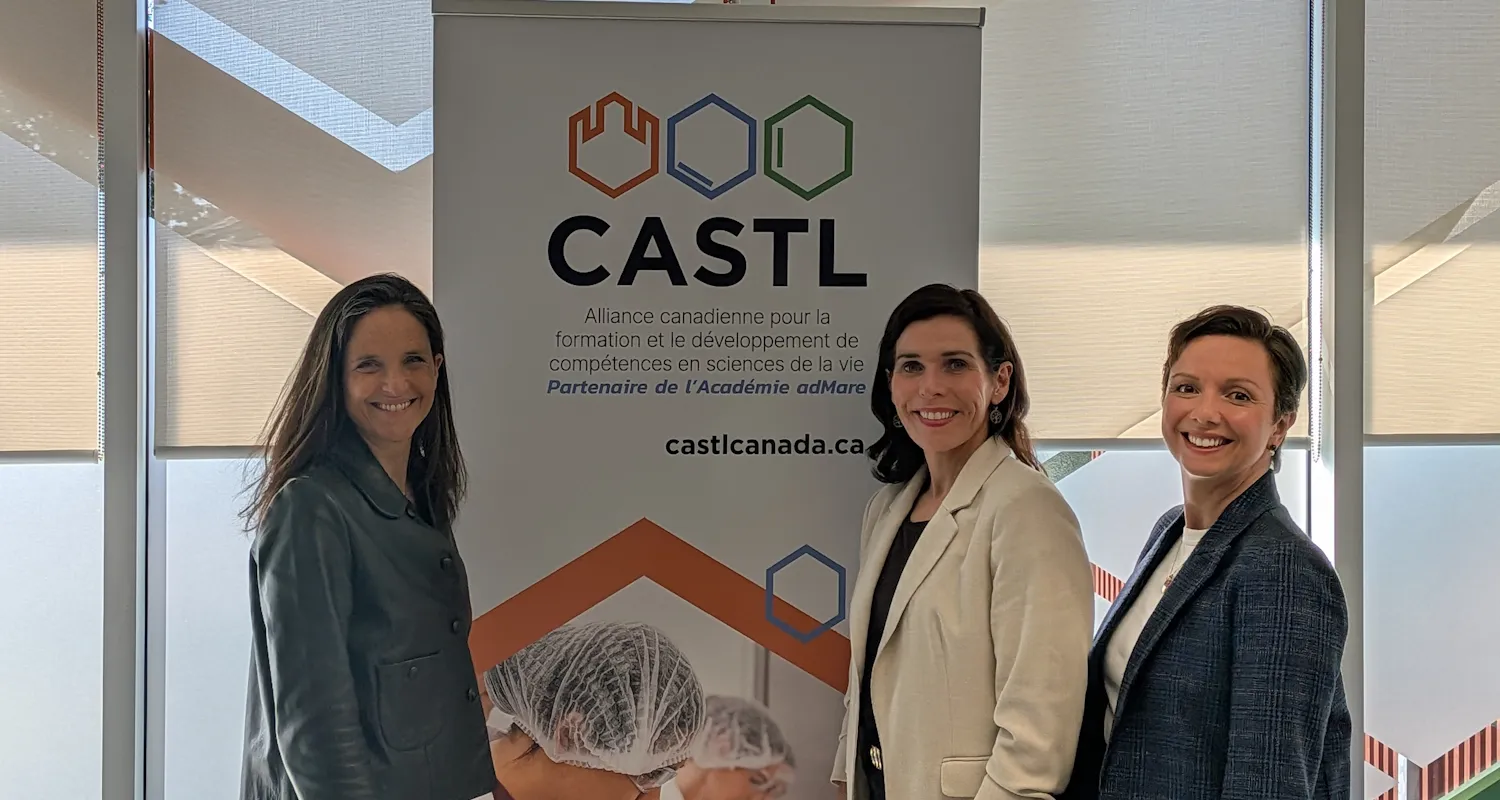
In this Leadership Spotlight, Penny Walsh, CEO of the Canadian Alliance for Skills and Training in Life Sciences (CASTL), and Darrin Morrissey, CEO of Ireland’s National Institute for Bioprocessing Research and Training (NIBRT), discuss how practical training, industry collaboration, and international partnerships are helping build the skilled workforce the sector needs.
Kestria partners Fastnet Talent and Pender & Howe combine insights to how international partnerships can help build a skilled workforce.
Building a workforce to match Canada's ambitions
Canada has the science, the research institutions, and the ambition to grow its life sciences and biomanufacturing sectors. What it needs is a workforce equipped to turn that potential into production capability.
For Penny Walsh, CEO of CASTL, this challenge was already evident in Prince Edward Island before the pandemic. As the province’s bioscience sector grew, employers across Atlantic Canada were struggling to find people with the practical skills needed to keep pace.
“We saw strong scientific talent, but we needed pathways into practical, regulated manufacturing training,” Walsh explains.
PEI BioAlliance introduced the concept of CASTL to help address that gap. What began as a regional initiative gained industry support and government investment, then expanded as the pandemic accelerated interest in domestic biomanufacturing capacity.
With support from the governments of Quebec, British Columbia, and Prince Edward Island, as well as the federal government through Innovation, Science and Economic Development Canada (ISED) and the Atlantic Canada Opportunities Agency (ACOA), CASTL grew into a national skills training organization.
Walsh joined CASTL in its early days and has seen that evolution firsthand. The organization has grown from an initiative within PEI BioAlliance into a national biomanufacturing training organization with facilities and training capabilities serving the needs of Canada's life sciences sector. But its guiding principle has not changed. "We were driven by industry, and still today, industry is our north star,” she says.
That principle informs CASTL’s curriculum, trainers, and facilities. Its 13-member National Training Advisory Committee brings together industry representatives from across Canada to identify shared training priorities, including GMP, contamination control, and aseptic technique, as well as emerging skills needs related to AI and automation, new technology platforms, and persistent hiring challenges. Industry professionals also contribute directly to the classroom, sharing their experience and helping learners understand the realities of working in biomanufacturing.
For Walsh, the need is not about a lack of scientific ability in Canada. “There is no shortage of talent in Canada,” she says. The opportunity is to complement the country’s strong post-secondary education system with practical, industry-informed training.
Turning scientific knowledge into practical skills
A science degree provides an important foundation, but working in a biopharmaceutical manufacturing environment requires a different set of capabilities. Employees must understand good manufacturing practices (GMP), documentation, quality, contamination control, and consistent execution. These requirements are closely connected to patient safety.
CASTL gives learners the opportunity to practise in a simulated GMP environment, using industry-relevant equipment and pilot-scale facilities. They can develop familiarity with manufacturing processes without the pressures of a live production campaign.
“You can practise, you can practise, and you can practise again,” Walsh says. “It’s a really great place to make mistakes and build that confidence before you apply those skills on the job.”
That practical experience helps learners understand not only how to operate a piece of equipment, but also how an individual task fits into a broader manufacturing process. It can make a meaningful difference when they move into the workplace.
„Practicing in a simulated GMP environment builds confidence before learners apply those skills on the job.“

Penny Walsh
CASTL graduates develop familiarity with equipment, production workflows, documentation, and the expectations of a GMP environment. The training does not replace company-specific onboarding, but Walsh says employers have confirmed that employees who are familiar with GMP practices, documentation and equipment are better prepared for site-specific onboarding.
Since 2020, CASTL has trained more than 1800 individuals to enter the sector, transfer skills from other industries, or find a pathway into life sciences in Canada.
The approach also reflects a broader shift in how the industry thinks about talent. Workforce development is not limited to graduates of specialized science programs. With the right training, people from different professional backgrounds can build careers in biopharmaceutical manufacturing.
Darrin Morrissey, CEO of NIBRT, describes a similar evolution in Ireland. Originally established to bridge the gap between academic qualifications and the practical requirements of biologics manufacturing, NIBRT has expanded its training to support people entering the industry from a wide range of professional backgrounds.
However, Morrissey emphasises that Ireland's success in biopharmaceutical manufacturing reflects more than investment in training alone. He points to the combined efforts of government, IDA Ireland, universities, industry and specialist organisations such as NIBRT in developing an ecosystem capable of supporting sustained industry growth. Workforce capability has been an important part of Ireland's ability to attract and support international investment, with NIBRT working closely with industry to anticipate talent requirements, often before new manufacturing facilities become operational.
Why collaboration accelerates capability
CASTL’s relationship with NIBRT has been central to the development of its training model. Rather than build an entirely new curriculum, CASTL became NIBRT’s exclusive licensed partner in Canada, gaining access to an established training framework, technical expertise, and a wider international network.
For Walsh, the decision was a practical one. NIBRT had spent more than 15 years developing and refining its bioprocessing curriculum, including adapting it to changing industry and regulatory requirements.
“Biomanufacturing is a global industry. Partnering with NIBRT meant we could build on years of experience delivering hands-on training and adapt that curriculum to what Canadian employers and learners need,” she says. “It’s been tried, it’s been tested, and at the end of the day, it’s a global sector.”
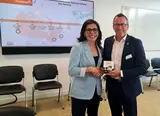
The partnership allowed CASTL to move more quickly while adapting the training to the Canadian market and its regulatory environment. It also supports a more consistent national approach, rather than having each province develop its own framework independently.
“By delivering a consistent core curriculum across our sites, we can complement what post-secondary institutions are already doing and adapt training to what employers need,” Walsh explains.
For Morrissey, the partnership represents more than the transfer of an established curriculum. As NIBRT's international presence has grown, identifying the right partners has been fundamental to its approach. Beyond technical capability, he emphasises the importance of shared values, cultural alignment and a common ambition to build something sustainable.
CASTL stood out from the outset, not only because of the strength of its team and shared vision, but also because of the commitment of industry and government to developing Canada's biomanufacturing capabilities.
Morrissey also emphasizes that collaboration must be reciprocal. While NIBRT shares its curriculum, teaching methods, and technical knowledge, working in different markets challenges the organization to reconsider how its programs are delivered.
“We strengthen our programme on the basis of what we’re learning in real time,” Morrissey explains.
Delivering training in Canada, for example, has encouraged NIBRT to consider different learner needs and multilingual environments, including the delivery of training in French. Those experiences inform how it adapts its programs elsewhere.
For both organizations, the relationship is intended to be ongoing. As Morrissey puts it, NIBRT looks for partnerships where there is a clear understanding that the work is “not a one and done” relationship.
Preparing people for what comes next
The skills required in biomanufacturing will continue to evolve. Digitalization, automation, artificial intelligence, and new technology platforms are changing how facilities operate and how employees interact with manufacturing processes.
CASTL’s National Training Advisory Committee helps the organization stay close to these developments, bringing together perspectives from employers across the country.
Kristina Parrant, Site Manager & Head of Operations at Evonik and member of CASTL’s advisory committee, sees the impact first-hand:
CASTL has become an important catalyst for Canada's life sciences sector, helping bridge the gap between talent development and industry needs. For Evonik, having a partner that understands both the pace of innovation and the realities of manufacturing is invaluable. What I appreciate most is that CASTL doesn't just talk about building the workforce of the future, they're actively doing it.
NIBRT takes a similarly proactive approach, engaging manufacturers, equipment vendors, regulators, and its own research teams to anticipate future training requirements.
For Morrissey, preparing people for the future is about more than developing new technical or digital skills. Employees will need to combine a strong foundation in biopharmaceutical manufacturing with digital fluency, adaptability and sound judgement. As AI and other technologies create opportunities to transform manufacturing processes, organisations face the challenge of encouraging innovation while maintaining the discipline required in a highly regulated industry.
Morrissey also highlights the importance of leadership and organisational culture in navigating this tension, creating an environment where people are encouraged to embrace change and new ways of working without compromising quality, compliance or patient safety.
NIBRT’s work extends beyond training delivery. Its applied research operation includes 12 principal investigators leading research teams focused on biomanufacturing processes and related industry challenges. This connection between research, technology, and workforce development helps inform the organization’s understanding of where the sector is heading.
CASTL is also broadening its support for employers through Learning and Development Advisory Services. The offering helps organizations assess team capabilities, identify skills gaps, and build more targeted training plans.
For Walsh, it is important that employers understand not only which courses employees should take, but also what capabilities their teams need and how training investments can address those needs.
The broader point is that workforce development must keep pace with the industry. As Walsh puts it, “Sustainable capability requires ongoing collaboration among employers, educators, and government, not a single training initiative, not a one and done.”
Infrastructure needs people
The pandemic brought the importance of domestic biomanufacturing capacity into sharp focus. It also demonstrated that manufacturing infrastructure alone cannot guarantee readiness.
A 2021 BioTalent Canada report projected that Canada would need 16,000 biomanufacturing workers by 2029. Walsh notes that updated data will be important in understanding how the sector’s hiring needs have evolved, but the underlying challenge remains: facilities and manufacturing capacity need skilled people to operate them.
“Facilities and equipment alone do not create capabilities. Skilled people do,” Walsh says.
Ireland’s experience offers another perspective on the importance of sustained investment. NIBRT was able to adapt its training and research operations during COVID-19 because of the infrastructure, expertise, and organizational capabilities developed over many years. Morrissey’s experience reinforces that readiness is built long before a crisis arrives.
The Canada–Ireland relationship has also gained recognition at the government level. Recent commitments between Canadian Prime Minister Mark Carney and Irish Taoiseach Micheál Martin have highlighted opportunities for closer cooperation, including the CASTL–NIBRT partnership.
Looking ahead, Morrissey sees significant opportunities to deepen the relationship beyond workforce training. NIBRT has developed a substantial applied research capability alongside its training activities, with close to 100 researchers working on challenges associated with biopharmaceutical manufacturing. He believes international partnerships can play an increasingly important role in advancing this research, bringing together academic expertise, industry partners and funding opportunities across different markets.
The growing relationship between Canada and the European Union could also create opportunities for collaborative research through programmes such as Horizon Europe. Morrissey also sees longer-term potential to develop internationally recognised qualifications, supporting greater consistency and mobility of skills across the global biopharmaceutical sector.
For Walsh, the priority is to ensure that Canada continues building on the capabilities it has established, while remaining connected to the expertise and partnerships that can help the sector progress.
CASTL’s growth reflects what can happen when industry identifies a need, government supports the response, and training organizations build the practical pathways that connect people to opportunity. NIBRT’s experience demonstrates the value of investing in that capability over time and sharing knowledge across borders.
As both leaders make clear, developing a strong life sciences workforce is not a short-term project. It requires sustained investment, ongoing collaboration, and a willingness to adapt as the industry changes. The facilities may provide the foundation, but it is the people who make the capability real.
About CASTL
The Canadian Alliance for Skills and Training in Life Sciences (CASTL) is Canada’s biomanufacturing training partner, dedicated to developing skilled talent to drive the country’s thriving biomanufacturing sector. With state-of-the-art, GMP-simulated facilities from coast to coast (in Charlottetown, PE; Montreal, QC; and Vancouver, BC), CASTL delivers hands-on, industry-informed training alongside flexible online learning.
As Canada’s exclusive provider of National Institute for Bioprocessing Research and Training (NIBRT) programs, CASTL offers world-class education with support from adMare BioInnovations, shaping the next generation of life sciences professionals. Learn more about CASTL in this video.

About NIBRT
The National Institute for Bioprocessing Research and Training (NIBRT) is a world-leading institute based in Dublin, Ireland, that provides training and research solutions in partnership with the biopharmaceutical manufacturing industry and academic community. Established to support the growth of the biopharma sector, NIBRT offers a unique learning environment replicating a modern bioprocessing facility and delivers industry-aligned programmes to thousands of trainees annually.
Through its partnerships with global biopharma companies, academic institutions and technology providers, NIBRT plays a pivotal role in advancing innovation, skills and excellence in bioprocessing worldwide. The NIBRT Global Partner Programme licenses NIBRT’s curriculum and expertise to an international alliance of training and education organisations to help address the global shortage of skilled biopharma professionals.
For more information visit www.nibrt.ie
Work With Pender & Howe on Your Executive Search
With offices across Toronto, Montreal, Vancouver, Calgary, Edmonton, Boston, and New York, Pender & Howe combines boutique-level partner involvement with deep sector intelligence across technology, life sciences, industrial, consumer goods, and professional services.